Kienyeji Poultry Farming in Kenya: Complete Guide
Introduction
Kienyeji poultry farming refers to the rearing of indigenous or local chicken breeds that are naturally adapted to the Kenyan environment. These chickens are commonly raised under free-range or semi-intensive systems where they feed partly on locally available resources such as insects, kitchen waste, and grains. Unlike commercial broilers and layers, Kienyeji chickens grow more slowly but are valued for their hardiness, natural taste, and ability to survive under minimal management.
In Kenya, Kienyeji poultry farming plays a significant role in rural livelihoods and food security. Indigenous chickens make up about 75% of the total poultry population, showing how widespread and important this farming system is across the country. The enterprise is practiced by both small-scale farmers and commercial investors due to its flexibility, affordability and profitability potential.
Importance of Kienyeji Poultry Farming in Kenya
1. Low Input Cost
One of the biggest advantages of Kienyeji poultry farming is its low cost of production. These chickens can survive on locally available feeds and are excellent scavengers, reducing the need for expensive commercial feeds. Farmers also spend less on housing and management compared to intensive poultry systems. This makes it an ideal agribusiness for beginners and smallholder farmers with limited capital.
2. High Market Demand
Kienyeji chicken products—both meat and eggs—are highly preferred in Kenya due to their organic nature, rich taste and perceived health benefits. As a result, they fetch higher prices in the market compared to broilers and layers. Demand continues to grow, driven by increasing consumer awareness and preference for natural foods making the business highly profitable.
3. Disease Resistance and Adaptability
Kienyeji chickens are naturally hardy and well adapted to local climatic conditions. They show greater resistance to common poultry diseases and harsh environmental conditions compared to exotic breeds. This reduces mortality rates and lowers veterinary costs, making them easier to manage, especially in rural settings with limited access to veterinary services.
4. Dual-Purpose Production (Meat and Eggs)
Unlike some commercial breeds that specialize in either meat or egg production, Kienyeji chickens serve both purposes. Farmers benefit from a steady supply of eggs for sale or home consumption, while mature birds can be sold for meat at premium prices. This flexibility provides multiple income streams from a single investment.
5. Sustainability and Low Management Requirements
Kienyeji farming supports sustainable agriculture practices. The birds can forage naturally, reducing reliance on external inputs and minimizing environmental impact. Their ability to thrive in free-range systems also means less labor and lower operational costs, making the system environmentally and economically sustainable.
6. Source of Income and Employment
Kienyeji poultry farming is a reliable source of income for many Kenyan households. It creates opportunities not only for farmers but also for others involved in the value chain such as feed suppliers, transporters, and traders. The business is also scalable, allowing farmers to start small and expand gradually into a commercial enterprise.
7. Nutritional and Cultural Value
Kienyeji chicken meat and eggs are widely regarded as more nutritious and flavorful than those from commercial breeds. They are also deeply rooted in Kenyan culture, often used in traditional ceremonies and special occasions. This cultural attachment further strengthens their demand in both rural and urban markets.
Systems of Rearing Kienyeji Chicken
1. Free-Range System
Birds are left to roam freely in search of food. This system has low cost but exposes birds to predators, diseases and low productivity.
2. Semi-Intensive System
Birds are housed but allowed access to an outdoor run during the day. This balances natural feeding and controlled management.
3. Intensive (Indoor) System
Birds are kept fully indoors with complete feeding and management. This system is costly and less common for Kienyeji birds.
Why Semi-Intensive System is Most Suitable
The semi-intensive system is the most suitable for Kienyeji poultry because it combines the advantages of both free-range and intensive systems. Birds can access natural feeds like insects and greens which reduces feeding costs while still benefiting from protection, controlled feeding and better disease management. It also improves growth rate and egg production compared to free-range systems, while being more affordable than full intensive systems.
- Kienyeji poultry farming in Kenya is a practical and profitable agribusiness that combines lowproduction costs with high market returns. Its resilience, adaptability, and strong consumer demand make it an excellent venture for both small-scale and commercial farmers. With proper management and gradual scaling, Kienyeji farming can serve as a sustainable source of income, food security, and economic empowerment in Kenya.
Kienyeji Poultry Housing Plan
Kienyeji poultry farming involves rearing indigenous chicken breeds that are well adapted to local conditions. Although these birds are hardy and can survive in free-range systems, proper housing is still essential to maximize productivity protect them from predators and control diseases.
Importance of a Good Poultry House
A good poultry house plays a critical role in the success of Kienyeji farming. First, it protects birds from harsh weather conditions such as rain, cold and excessive heat which can reduce growth and egg production. Secondly, it provides security against predators like dogs, hawks and wild animals. Additionally, a well-designed house helps in controlling diseases by keeping the environment clean, dry and well-ventilated. It also makes management practices such as feeding, vaccination, and egg collection easier ultimately improving productivity and profitability.
What Forms a Good Poultry House
- Proper Ventilation: A good poultry house must allow free flow of fresh air without exposing birds to strong winds. Ventilation removes excess heat, moisture, and harmful gases, keeping the birds healthy.
- Adequate Space: Overcrowding leads to stress, disease spread and reduced growth. Each bird should have enough space to move, feed and rest comfortably.
- Strong and Durable Materials: The house should be constructed using locally available but strong materials such as timber, iron sheets and wire mesh to ensure durability and reduce maintenance costs.
- Good Drainage: The floor should be slightly raised and dry to prevent water accumulation, which can lead to diseases.
- Protection from Predators: Use wire mesh and proper doors to prevent entry of predators and thieves.
- Easy Cleaning and Management: The design should allow easy removal of droppings, cleaning, and disinfection.
Poultry House Plan for 100 Kienyeji Birds
Space Requirements;
Indoor space: 0.2–0.3 m² per bird
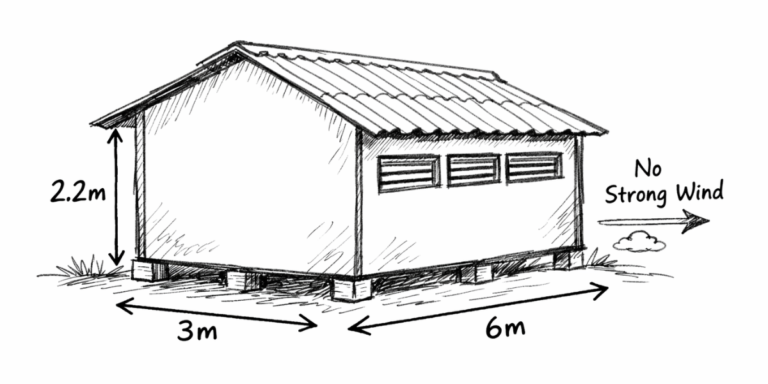
Ideal size for 100 birds can be 6m by 4m
Front height: 2.5 meters
Back height: 2.0 meters
This slope allows proper drainage of rainwater.
Layout Design;
Use a raised floor (about 1 ft above ground), cover floor with wood shavings or sawdust (deep litter system)
Wall
Lower part timber (about 1 ft high)
Upper part: wire mesh for ventilation
Use Iron sheets for roofing
Ventilation and Lighting;
Provide open sides covered with mesh
Ensure the house is oriented east-west to reduce direct sunlight. Avoid facing strong winds.
Outdoor Run;
Provide 1–2 m² per bird outside
For 100 birds: 100–200 m² run area
Fence using wire mesh
Include shade
Internal Arrangement;
Feeders and Drinkers_Place evenly to avoid crowding
Clean regularly
Perches;
Provide wooden perches for roosting
Space: 20–25 cm per bird
Nesting Boxes;
1 nesting box for every 4–5 hens
Place in quiet dark corners
- A well-planned poultry house is essential for successful Kienyeji farming. The semi-intensive system, supported by a properly designed house and run area, offers the best balance between cost, productivity, and bird welfare. By following the above housing plan, farmers can achieve better growth, improved egg production, and higher profits.
Feeding Plan for Kienyeji Poultry (Semi-Intensive System)
Feeding is one of the most important aspects of Kienyeji poultry farming because it directly determines growth, egg production, and overall health. Under a semi-intensive system, birds are not fully dependent on the farmer for feed—they are allowed to scavenge for natural feeds such as insects, worms, and greens, while still receiving supplementary feeding at the poultry house. This combination reduces costs while ensuring proper nutrition.
Feeding Schedule in a Semi-Intensive System
In a semi-intensive system, feeding should follow a clear daily routine. Birds should be fed early in the morning (around 6:00–8:00 a.m.) before being released. This ensures they receive a balanced diet before scavenging. After feeding, they can be allowed outside from around 9:00 a.m. to 4:00–5:00 p.m. when the dew has dried and conditions are safe for movement. During this time, they pick insects, worms and greens which provide natural proteins and vitamins. In the evening, birds should be returned to the house and given a small supplement if necessary especially for layers.
Allowing birds to scavenge helps reduce feeding costs and provides additional nutrients, particularly proteins and minerals from natural sources.
Importance of Supplementary Feeding
Even though Kienyeji chickens can forage, they cannot meet all their nutritional requirements from scavenging alone. A balanced diet must still be provided to supply energy, protein, vitamins and minerals which are essential for growth and egg production.
Supplementary feeding improves:
- Faster growth rate
- Higher egg production
- Strong immunity and disease resistance
Homemade Feed Formulation
Due to the high cost of commercial feeds, farmers are encouraged to prepare their own feeds using locally available materials. Feed accounts for up to 70–80% of production costs, so making your own feed can significantly increase profits.
Key Nutrient Components Includes:
- Energy Sources
These provide energy for body functions and growth.
- Maize
- Sorghum
- Millet
- Maize bran or pollard
These should form the largest portion of the feed.
2. Protein Sources
Proteins are essential for growth and egg production.
- Omena (fish meal)
- Soya beans
- Sunflower cake
Omena is especially important because it is rich in protein and supports strong growth and egg formation.
3. Vitamins and Minerals
These improve immunity and productivity.
- Green vegetables (kales, grass)
- Kitchen leftovers
- Calcium sources (crushed eggshells or limestone for layers)
Example Homemade Feed Formula
A simple balanced feed mixture for growers/layers can include:
- 60% maize or maize germ (energy)
- 20% sunflower or soya meal (protein)
- 10% omena (high protein)
- 8% maize bran or pollard
- 2% minerals (salt + calcium)
This mixture ensures the birds receive enough energy, protein and minerals for proper growth and egg production.
Additional Feeding Tips
- Always provide clean water at all times
- Avoid using rotten or contaminated maize to prevent diseases
- Mix feeds thoroughly to ensure uniform nutrients
- Supplement with kitchen waste and greens
- Observe birds and adjust feeding depending on performance
- A well-planned feeding program is essential for successful Kienyeji poultry farming. In a semi intensive system, feeding birds in the morning, allowing them to scavenge during the day, and supplementing their diet with homemade feeds provides a cost-effective and nutritionally balanced approach. By using locally available ingredients like maize, omena, and greens, farmers can significantly reduce costs while maintaining high productivity.
Disease Prevention and Control in Kienyeji Poultry
Disease prevention and control is a key pillar in successful Kienyeji poultry farming. Even though indigenous chickens are known for their hardiness and resistance, they are still vulnerable to various infectious diseases. Poor disease management can quickly wipe out an entire flock leading to heavy losses and farm failure.
How Diseases Can Lead to Farm Failure
Diseases can severely affect poultry production if not properly controlled. First, they cause high mortality especially in chicks and young birds hence reducing flock size. Secondly, sick birds show poor growth and low egg production directly affecting income. In addition, disease outbreaks increase the cost of treatment and control which can be expensive for small-scale farmers. Some diseases spread very fast and can infect the entire flock within a short time. Without proper biosecurity and vaccination, a farmer can lose all birds making the enterprise unprofitable and unsustainable.
Common Poultry Diseases in Kienyeji Chicken
1. Newcastle Disease
Signs and Symptoms:
Birds show coughing, sneezing, greenish diarrhea, twisted neck (nervous signs) and sudden death. Egg production drops sharply.
Prevention:
Regular vaccination, proper hygiene and restricting visitors.
Nature of the Disease:
Newcastle disease is a highly contagious viral disease that spreads rapidly through air, contaminated feed, water and equipment. It is one of the most dangerous poultry diseases because it can kill a large number of birds within a few days if not controlled.
2. Coccidiosis
Signs and Symptoms:
Bloody diarrhea, weakness, ruffled feathers, weight loss and reduced feed intake.
Prevention:
Maintain dry litter, avoid overcrowding and use coccidiostats when necessary.
Nature of the Disease:
Coccidiosis is caused by parasites that attack the intestinal lining of birds. It thrives in wet and dirty environments, especially in poorly managed poultry houses. It mainly affects young birds and can cause severe losses if hygiene is poor.
3. Gumboro (Infectious Bursal Disease)
Signs and Symptoms:
Diarrhea, depression, ruffled feathers, trembling and sudden death in young birds.
Prevention:
Vaccination and strict biosecurity.
Nature of the Disease:
Gumboro is a viral disease that weakens the bird’s immune system, making it more susceptible to other infections. It mainly affects chicks and growers and spreads easily through contaminated materials.
4. Fowl Pox
Signs and Symptoms:
Scabby lesions on comb, wattles and eyelids; difficulty eating and breathing in severe cases.
Prevention:
Vaccination and mosquito control.
Nature of the Disease:
Fowl pox is a slow-spreading viral disease transmitted by mosquitoes or direct contact. It affects the skin and sometimes the respiratory system. Although it has low mortality, it reduces productivity significantly.
5. Fowl Typhoid
Signs and Symptoms:
Loss of appetite, diarrhea (yellowish), weakness and sudden death.
Prevention:
Good hygiene, sourcing healthy chicks and disinfection.
Nature of the Disease:
Fowl typhoid is a bacterial disease that affects birds of all ages. It spreads through contaminated feed, water and droppings. It can cause high mortality if not controlled early.
6. Chronic Respiratory Disease (CRD)
Signs and Symptoms:
Coughing, sneezing, nasal discharge, swollen eyes and slow growth.
Prevention:
Proper ventilation, avoiding overcrowding and maintaining hygiene.
Nature of the Disease:
CRD is a bacterial infection that affects the respiratory system. It spreads slowly but can become severe when combined with poor environmental conditions such as dust and poor ventilation.
Vaccination Schedule for Kienyeji Poultry
Vaccination is the most effective way to prevent major poultry diseases. Below is a recommended vaccination schedule:
| Age of Bird | Vaccine | Disease Prevented | Method of Administration |
| Day 1 | Marek’s (optional) | Marek’s Disease | At hatchery (injection) |
| 1–2 weeks | Newcastle (Lasota) | Newcastle Disease | Eye drops / drinking water |
| 2–3 weeks | Gumboro | Gumboro Disease | Drinking water |
| 4 weeks | Newcastle (Booster) | Newcastle Disease | Drinking water |
| 6–8 weeks | Fowl Pox | Fowl Pox | Wing stab |
| 8 weeks | Gumboro (Booster) | Gumboro Disease | Drinking water |
| 10–12 weeks | Newcastle | Newcastle Disease | Drinking water |
| Every 3 months | Newcastle | Newcastle Disease | Drinking water |
- Effective disease prevention and control are essential for the success of Kienyeji poultry farming. By maintaining good hygiene, practicing biosecurity, and following a proper vaccination schedule, farmers can minimize losses and improve productivity. Prevention is always better and cheaper than treatment, making it a key investment in poultry farming.
Record Keeping in Kienyeji Poultry Farming
Record keeping is a crucial management practice in Kienyeji poultry farming. It involves systematically documenting all activities and transactions on the farm. Proper records help farmers monitor performance, make informed decisions, detect problems early, and improve overall productivity. Without accurate records, it becomes difficult to know whether the farm is making profit or loss.
Importance of Record Keeping
Keeping records allows a farmer to track the progress of the poultry enterprise over time. It helps in identifying trends such as growth rate, egg production and disease occurrence. Records also support financial management by showing income and expenses, making it easier to calculate profit. In addition, they help in planning, budgeting and accessing loans or support from financial institutions, since they provide proof of farm performance. Good records also assist in disease control by keeping track of vaccinations and treatments given to the birds.
Important Records to Be Kept
Stock Record
This record shows the number of birds on the farm at any given time. It includes chicks bought, birds sold, deaths, and the current balance. It helps the farmer monitor flock size and detect unusual losses.
Feeding Record
A feeding record tracks the type and quantity of feed given to the birds daily. It helps in evaluating feed consumption and controlling feeding costs, which are usually the highest expense in poultry farming.
Egg Production Record
This record shows the number of eggs collected daily. It helps the farmer monitor productivity and identify any sudden drop in egg production, which may indicate disease or poor feeding.
Health and Vaccination Record
This includes details of vaccinations, treatments, and disease outbreaks. It helps ensure that birds are vaccinated on time and assists in managing and preventing diseases.
Mortality Record
This record captures the number of birds that die and possible causes of death. It helps identify disease patterns and improve management practices.
Sales and Income Record
This record shows all income from the sale of eggs, birds, or manure. It helps in tracking revenue and evaluating business performance.
Expense Record
This includes all costs incurred such as feed, vaccines, labor, and equipment. It helps in determining the total cost of production.
Sample of Records
- Stock Record
| Date | Chicks Bought | Birds Sold | Deaths | Balance |
| 01/05/2026 | 100 | 0 | 0 | 100 |
| 10/05/2026 | 0 | 5 | 2 | 93 |
2. Feeding Record
| Date | Feed Type | Quantity (kg) | Remarks |
| 01/05/2026 | Homemade Mix | 12 | Normal feeding |
| 02/05/2026 | Homemade Mix | 11 | Reduced intake |
3. Egg Production Record
| Date | Number of Eggs | Remarks |
| 01/05/2026 | 35 | Good production |
| 02/05/2026 | 28 | Slight drop observed |
4. Health and Vaccination Record
| Date | Activity | Disease/Vaccine | Method | Remarks |
| 05/05/2026 | Vaccination | Newcastle | Drinking water | All birds treated |
| 12/05/2026 | Treatment | Coccidiosis | Oral | Birds recovering |
5. Mortality Record
| Date | Number Dead | Suspected Cause | Remarks |
| 10/05/2026 | 2 | Coccidiosis | Treated remaining |
| 15/05/2026 | 1 | Unknown | Under observation |
6. Sales and Income Record
| Date | Item Sold | Quantity | Unit Price (Ksh) | Total (Ksh) |
| 10/05/2026 | Eggs | 30 | 15 | 450 |
| 15/05/2026 | Chicken | 5 | 600 | 3000 |
7. Expense Record
| Date | Item Purchased | Quantity | Cost (Ksh) | Remarks |
| 01/05/2026 | Feed ingredients | 50 kg | 2500 | Bulk purchase |
| 05/05/2026 | Vaccine | 1 dose | 300 | Newcastle |
- Record keeping is essential for the success and sustainability of Kienyeji poultry farming. By maintaining accurate and up-to-date records, farmers can monitor performance, control costs and make better decisions. Simple tables like the ones above can greatly improve farm management and profitability.
Conclusion
Kienyeji poultry farming is a practical, sustainable and profitable agribusiness that offers great potential for farmers in Kenya. As outlined in this guide, success in this enterprise is not by chance but by proper planning and management. Key areas such as choosing the right production system, constructing a suitable poultry house, providing balanced and cost-effective feeding, implementing effective disease prevention and control measures and maintaining accurate records all work together to determine the overall performance of the farm.
The semi-intensive system stands out as the most suitable approach because it balances natural feeding with controlled management, reducing costs while improving productivity. Proper housing ensures bird safety and comfort, while good feeding practices—especially the use of homemade feeds—help farmers minimize expenses without compromising nutrition. Disease control through hygiene, biosecurity, and vaccination protects the flock from major losses, while record keeping enables farmers to monitor progress, make informed decisions, and improve efficiency.Ultimately, Kienyeji poultry farming can provide a reliable source of income, food security, and employment when managed well.