Modern Poultry House Plan for 100 Birds in Kenya
Introduction
A poultry house is not just a shelter—it is the foundation that determines whether your poultry business succeeds or struggles. Many farmers focus heavily on buying quality breeds and feed but overlook housing, yet this is where productivity begins. A well-designed poultry house creates a controlled environment that supports bird health, improves egg production, and reduces losses. For a small to medium-scale farmer keeping around 100 birds, getting the housing right from the start can mean the difference between consistent profits and constant challenges.
Importance of a Good Poultry House
Protection from Harsh Weather
In Kenya, weather conditions can change rapidly, from heavy rains to intense heat during dry seasons. A good poultry house shields birds from rain, which can cause dampness and lead to diseases like respiratory infections. It also protects them from excessive heat, which can stress birds, reduce feed intake, and lower egg production. During cold nights, especially in highland areas like Nakuru, proper housing helps maintain warmth, preventing stress and energy loss. By maintaining a stable internal environment, birds can focus their energy on growth and egg production rather than survival.
Disease Prevention and Control
Diseases are one of the biggest threats in poultry farming, and poor housing often makes the situation worse. A well-built poultry house reduces exposure to disease-causing organisms by keeping the environment clean and dry. It also allows for proper waste management, reducing ammonia buildup from droppings, which can damage birds’ respiratory systems. Additionally, a controlled house makes it easier to implement biosecurity measures such as footbaths and restricted access, minimizing the spread of infections from outside sources.
Prevention of Injuries and Stress
Overcrowded or poorly designed houses often lead to injuries caused by pecking, trampling, or collisions. Birds kept in cramped conditions become aggressive, leading to feather pecking and even cannibalism. A good poultry house provides enough space and proper arrangement of feeders and drinkers, reducing competition and stress. When birds are calm and comfortable, they convert feed more efficiently and maintain better health, resulting in higher productivity.
Security from Theft and Predators
Poultry farming can attract theft and predator attacks, especially in rural areas. A properly constructed poultry house with strong walls, secure doors, and protective wire mesh keeps out predators such as dogs, wild animals, and even rodents. It also discourages theft, ensuring your investment is safe. Security is often underestimated, yet losing birds can wipe out profits quickly.
Improved Productivity and Profitability
Ultimately, the goal of any poultry farmer is to maximize returns. A good poultry house directly contributes to increased egg production and better growth rates. Birds that are comfortable, healthy, and stress-free will lay more eggs consistently. Feed efficiency also improves, meaning less waste and better returns on investment. In short, proper housing turns your poultry project into a sustainable and profitable business.
What Forms a Good Poultry House
Adequate Space and Proper Dimensions
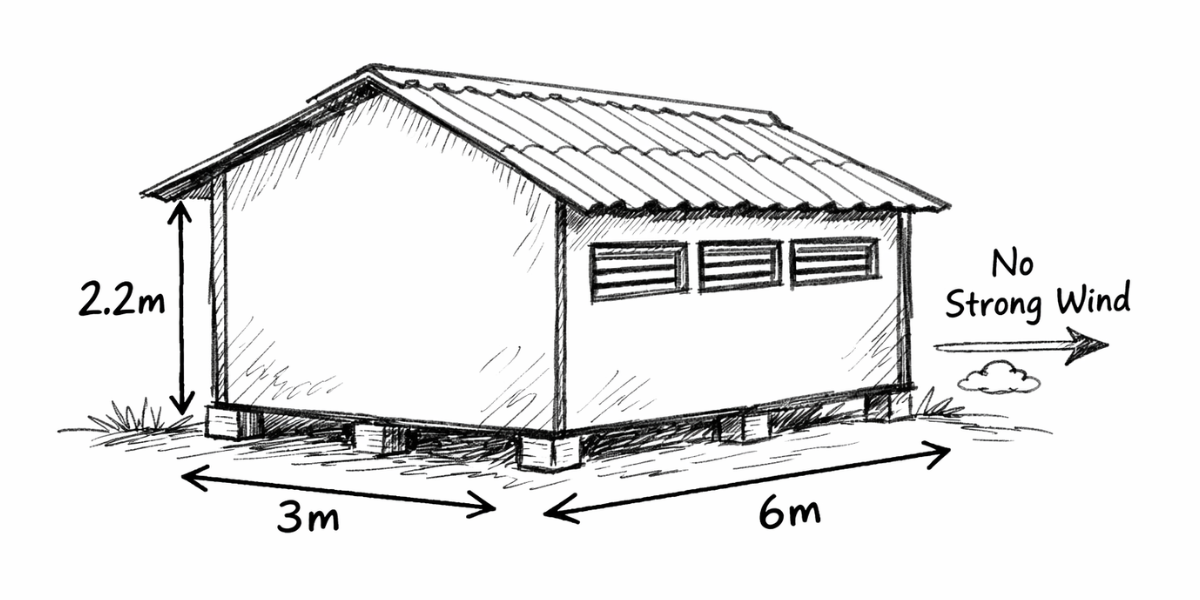
Space is one of the most critical factors in poultry housing. For layers, each bird requires about 2 square feet of space. This means that for 100 birds, you need approximately 200 square feet, which is about 18–20 square meters. A practical and recommended size is a house measuring about 6 meters by 3 meters. However, if resources allow, expanding slightly to 7 meters by 3 meters provides extra comfort and room for future expansion.
Adequate space prevents overcrowding, which can lead to stress, disease spread, and reduced egg production. It also allows birds to move freely, access feed and water easily, and express natural behaviors. Proper spacing ensures uniform growth and minimizes competition, which is especially important in layer farming where consistency in production matters.
Proper Lighting System
Lighting plays a crucial role in the productivity of poultry, particularly layers. Chickens require about 14 to 16 hours of light per day to maintain optimal egg production. Natural daylight alone is often insufficient, especially during cloudy seasons or shorter days, so artificial lighting such as bulbs should be used to supplement it.
Light stimulates the reproductive system of hens, encouraging consistent egg laying. It also helps regulate feeding patterns, as birds tend to eat more when there is sufficient light. Poor lighting can lead to reduced egg production, irregular laying cycles, and even behavioral problems. Therefore, ensuring a well-lit poultry house is essential for maintaining productivity throughout the year.
Effective Ventilation System
Ventilation is a key factor in maintaining a healthy poultry environment. Birds produce heat, moisture, and waste gases such as ammonia, which can accumulate quickly in a poorly ventilated house. Without proper airflow, these conditions create a breeding ground for diseases and can severely affect bird health.
A good poultry house should have open sides covered with wire mesh to allow continuous airflow while keeping predators out. Ventilation openings should ideally be positioned on the side that does not face strong prevailing winds to avoid direct drafts, which can stress the birds. Proper ventilation ensures that fresh air enters the house while hot, stale air exits, maintaining a comfortable temperature and reducing humidity levels.
Strong Structure and Orientation
The structure of the poultry house should be durable and practical. The lower part of the wall, about 1 to 2 feet high, should be solid to protect birds from rain, cold winds, and predators. The upper section should be open with wire mesh to promote ventilation. The roof should be made of materials like iron sheets and designed with a slope to allow rainwater to drain easily.
Orientation is also important. The house should be constructed along the East–West direction to minimize direct sunlight entering the house during the hottest parts of the day. This helps keep the interior cooler and more comfortable for the birds, especially in warm regions.
Hygiene and Waste Management
Maintaining cleanliness in the poultry house is essential for preventing diseases and ensuring bird health. The floor should ideally be made of concrete for easy cleaning and disinfection. Litter materials such as wood shavings should be kept dry and changed regularly to prevent the buildup of harmful bacteria and parasites.
A clean environment reduces the risk of infections and improves overall bird performance. Incorporating simple measures like footbaths at the entrance can further enhance biosecurity by preventing the introduction of diseases from outside.
Security Measures
A good poultry house must also include proper security features. Strong doors, secure locks, and well-fitted wire mesh help protect birds from theft and predators. Fencing around the poultry unit adds an extra layer of security, especially in areas prone to animal attacks.
Security is not just about preventing loss but also about ensuring peace of mind for the farmer. Knowing that your birds are safe allows you to focus on improving productivity and managing your farm effectively.
Conclusion
Investing in a good poultry house is one of the smartest decisions a poultry farmer can make. It goes beyond providing shelter—it creates an environment where birds can thrive, remain healthy, and produce optimally. From proper spacing and lighting to ventilation, structure, hygiene, and security, every aspect of the poultry house plays a vital role in the success of your farming venture.
For a farmer starting with 100 birds in Kenya, a well-planned poultry house measuring around 6m by 3m, with proper ventilation, lighting, and security, provides a strong foundation for growth. When housing is done right, everything else—from feeding to disease management—becomes easier, setting you on the path to a profitable and sustainable poultry business.