
HOW TO REDUCE CHEMICAL FERTILIZER USE WITH REGENERATIVE PRACTICES IN KENYA
1. Introduction
The overuse of chemical fertilizers in Kenya has contributed to declining soil health, increased production costs, and long-term environmental degradation. While synthetic fertilizers have historically boosted yields, they have also accelerated soil acidity, reduced microbial diversity, and created production systems heavily dependent on costly external inputs. As climate change intensifies and soil fertility declines across major agricultural regions, Kenyan farmers increasingly face reduced yield stability, high input prices, and lower profitability. Regenerative agriculture (RA) offers a transformative solution by promoting natural soil fertility building, reduced chemical input use, and an integrated approach to soil and ecosystem restoration. Practices such as composting, mulching, intercropping, agroforestry, and organic matter recycling represent scientifically proven pathways for restoring soil structure and reducing dependency on synthetic fertilizers. RA is not merely an environmental movement—it is an economically viable, farmer-centered approach capable of enhancing productivity while regenerating degraded landscapes.
2. Importance of Reducing Chemical Fertilizer Use in Kenya
Kenya’s heavy reliance on chemical fertilizers is rooted in decades of soil nutrient depletion and the push for high-yield crop varieties. However, continuous use without adequate organic matter replenishment has caused soils to become acidic, compacted, and biologically weak. These degraded soils respond poorly to synthetic fertilizers, forcing farmers to apply higher quantities each year, further increasing production costs. Additionally, global fertilizer price fluctuations have made farming less predictable for smallholders whose profit margins are already tight. Reducing chemical fertilizer use is therefore essential not only for ecological health but also for farmer financial resilience and long-term national food security. Regenerative practices allow farmers to rebuild fertility organically, increasing soil carbon content, microbial activity, and nutrient cycling while lowering the need for synthetic inputs. This shift supports climate resilience by enhancing water infiltration and reducing erosion—critical benefits given Kenya’s growing climate variability.
3. Key Regenerative Practices That Reduce Fertilizer Use
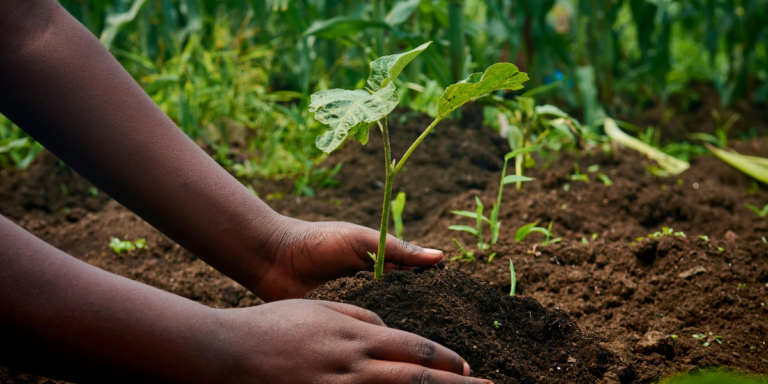
Several regenerative practices have proven effective in reducing fertilizer dependency while improving long-term soil productivity. Composting is a foundational approach that enhances soil structure, increases nutrient availability, and boosts microbial life. When combined with farmyard manure, compost can substitute a significant portion of synthetic fertilizers, especially in maize, beans, sorghum, and horticultural systems. Mulching reduces moisture loss, regulates soil temperature, and slows organic matter decomposition to create a continuous nutrient supply. Intercropping and crop rotation improve soil nitrogen fixation, particularly where legumes such as beans, cowpea, pigeon pea, and groundnut are incorporated. Agroforestry systems further strengthen soil fertility through natural leaf litter, nitrogen-fixing trees, and shade that reduces soil degradation. These practices work synergistically to rebuild soil health, reduce erosion, and create biologically active soils that produce healthier crops with fewer fertilizer inputs.
4. Soil Health Improvements Resulting from Regenerative Approaches
Regenerative agriculture directly improves soil physical, chemical, and biological health, allowing farmers to reduce chemical inputs without sacrificing yields. Increased organic matter under RA enhances nutrient retention, reduces leaching, and improves soil structure for better root development. Biological diversity—especially microbial populations—plays a critical role in nutrient cycling, naturally converting organic materials into plant-available forms. This process reduces the need for synthetic nitrogen and phosphorus fertilizers over time. Practices such as cover cropping add continuous organic cover, prevent erosion, and feed soil microorganisms, while agroforestry increases carbon sequestration and microclimate stability. RA also enhances water infiltration and moisture retention, creating more drought-resilient systems. These soil improvements translate into higher productivity even with lower fertilizer input, as healthier soils respond more efficiently to both organic and inorganic nutrient sources.
5. Socio-Economic and Livelihood Impacts of Regenerative Agriculture in Kenya
Regenerative Agriculture (RA) has demonstrated transformative socio-economic benefits for smallholder farming households in Kenya, especially in semi-arid and drought-prone areas. By reducing reliance on expensive synthetic fertilizers and agrochemicals, RA significantly lowers the cost of production, allowing farmers to retain more income from each harvest. Most smallholders traditionally spend 30–45% of their seasonal budget on fertilizers, so even partial substitution with compost, manure, and mulching greatly improves financial stability. Improved soil fertility and water retention lead to more stable yields, reducing the risk of total crop failure, which is common in rain-fed agriculture. RA also increases diversified income streams through agroforestry, livestock integration, beekeeping, and local value addition. Farmers working in cooperatives or RA groups benefit from knowledge sharing, better market access, and sometimes premium prices for sustainably grown produce. Ultimately, RA strengthens food security, reduces vulnerability to climate shocks, and enhances household resilience.
6. Case Studies and Evidence of Regenerative Agriculture Success in Kenya
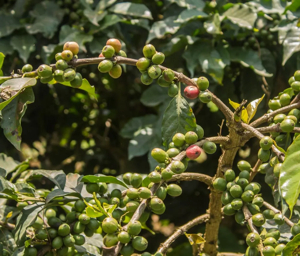
Across Kenya, numerous case studies demonstrate improved yields, restored soils, and higher incomes resulting from regenerative agriculture. In Eastern Kenya, smallholders supported by development programs adopted intercropping, composting, mulching, and agroforestry on degraded land. Within two to three seasons, yields of maize, beans, pigeon pea, and sorghum increased by an average of 60–80%, driven by better soil structure and moisture retention. In Central Kenya’s coffee belt, farmers who introduced shade trees, organic mulches, and cover crops reported improved cherry size, reduced fertilizer costs, and additional income from fruit and fodder trees. Youth and women-led groups have successfully adopted composting and micro-dosing, gaining higher returns due to lower input costs and increased productivity. These examples consistently highlight RA as a proven, scalable model capable of transforming livelihoods while restoring degraded ecosystems.
7. Conclusion
The transition from heavy chemical fertilizer use to regenerative agricultural practices in Kenya represents both an ecological necessity and an economic opportunity. Regenerative agriculture restores soil organic matter, enhances biodiversity, increases water retention, and builds long-term fertility—outcomes that synthetic fertilizers alone cannot achieve. Through composting, mulching, agroforestry, and crop diversification, farmers reduce dependence on costly external inputs and strengthen their resilience to climate variability. This transformation is especially critical in Kenya, where soil degradation, high fertilizer prices, and unpredictable weather threaten agricultural productivity.
Evidence from various regions across Kenya demonstrates that regenerative agriculture significantly improves food security, income stability, and community resilience. The success of documented case studies shows that RA is not theoretical; it functions effectively in diverse agro-ecological zones. As more farmers adopt these practices, Kenya moves closer to achieving productive, low-input, climate-resilient agriculture. Reducing chemical fertilizer use through regenerative practices is thus not merely a soil management strategy—it is a holistic pathway toward healthier ecosystems, empowered communities, and sustainable national food systems.